
 Live Answer 24/7
Do You Know Where Your Household Plumbing Waste Really Goes?
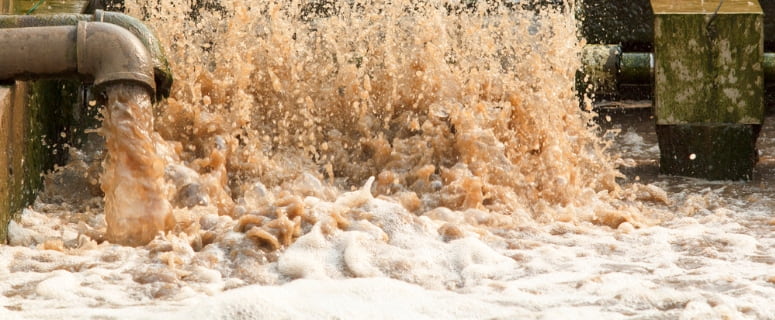
How do sewer systems work? Where does my human waste go after it’s flushed out of my home? These are the questions that keep us up at night, are they not?
Okay, honestly I don’t think there’s anyone who lays awake at night staring up at the ceiling thinking about sewage lines. Of course, now that I’ve brought it up, it wouldn’t be fair to leave you in suspense about your sewer system.
Let’s take a look a some of the different types of sewer systems and how they work.
Into a Septic Tank... And Then Where?
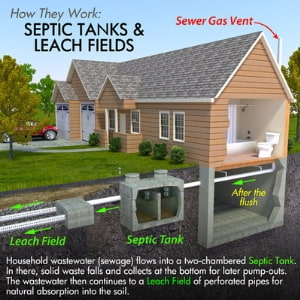 If you live in a rural area, your plumbing may not be connected to a public drain system. In this case, you likely have a septic tank that holds and treats your sewage right on your property.
Septic tanks hold sewage while the solid waste is separated from the water. Solids sink to the bottom of the airtight tank to form "sludge" and grease and oils float to the top, forming "scum."
The wastewater that remains is then passed through a filter and out to a drainfield, where water is naturally treated by the soil and becomes groundwater.
Sewage Treatment Plants
 If you live in a city that has a central sewer system, your waste likely moves through a series of underground sewer pipes to a single treatment plant.
Most municipal sewage plants treat wastewater in 1 to 3 stages. In primary treatment, solid waste is separated from wastewater much as it would be in a septic tank, and the solid waste is collected and disposed of.
If the water continues onto a secondary treatment, it will pass into aeration tanks, where organic bacteria will be introduced and eat up almost all of the organic matter and nutrients in the wastewater. The wastewater will then flow into a settling tank, where the bacteria is settled out. By this point, about 90% of the bacteria is gone from the wastewater.
If the water continues to tertiary treatment, it will have chemicals added to it to remove things like nitrogen or phosphorus. Chlorine is also added to kill any bacteria that is still left behind after treatment. The treated water is then discharged, and put back into the city's water supply.
What About Some Other Water Disposals?
 Most public sewer systems are gravity drain systems, meaning that the pipes that move sewage away from your home and to the treatment plant run at a slope so that the sewage is moved by gravity alone.
These systems occasionally use pumping stations to give the wastewater an extra push. Some sewage treatment plants employ the use of electric rotating discs, pumps, or air blowers to aerate the wastewater. This process is known as- you guessed it- electric sewage treatment.
Another way sewage can be treated, usually in rural areas, is with a cesspool. The difference between a Cesspool and a septic tank is that cesspools don’t use a drainfield to treat the water. Instead, the water that has been separated from the solid waste filters through the porous brick or cement block walls of the tank, directly into the soil.
Want to know how you can keep your drains and sewer clean to keep the sewage moving? Then call Allens Plumbing today at (808) 877-6370 for drain and sewer cleaning services in Maui!